


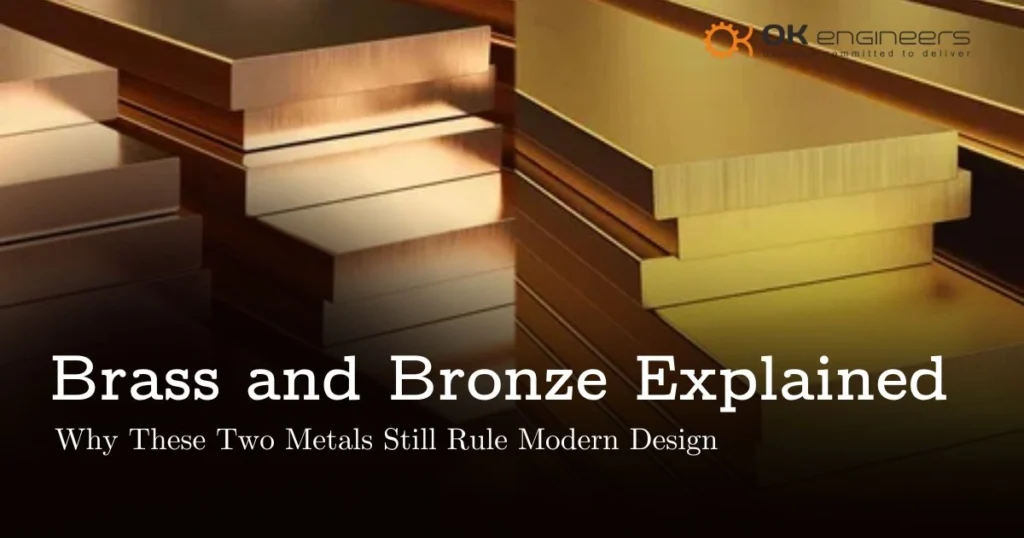
In a world of advanced alloys and synthetic materials, brass and bronze continue to dominate modern design, architecture, and engineering. From luxury interiors to industrial components, these classic metals remain relevant due to their strength, beauty, and reliability.
At OK Engineers, we work closely with both across multiple applications—from precision-engineered components to durable industrial fittings. Their timeless appeal and proven performance explain why designers and engineers still trust them in 2025.
This guide explains everything you need to know about their differences, and why they still rule modern design.
What Are Brass and Bronze? (Quick Overview)
Both are copper-based alloys. However, their composition and performance differ.
- Brass = Copper + Zinc
- Bronze = Copper + Tin (sometimes aluminum or phosphorus)
Despite their similarities, their use cases vary widely across design and engineering.
Brass vs Bronze Difference: Composition & Basics
Chemical Composition Table
| Feature | Brass | Bronze |
| Primary Alloy | Copper + Zinc | Copper + Tin |
| Color | Yellow-gold | Reddish-brown |
| Strength | Moderate | High |
| Corrosion Resistance | Good | Excellent |
| Cost | Lower | Higher |
The brass and bronze difference starts at the atomic level. Zinc makes brass easier to shape, while tin gives bronze superior durability.
You May Also Like This: How To Clean Steel
Brass vs Bronze: Physical and Mechanical Properties
Brass
- Softer and more flexible
- Easy to machine and polish
- Excellent electrical conductivity
- Ideal for decorative and precision parts
Bronze
- Harder and stronger
- High resistance to wear and corrosion
- Performs well in marine and outdoor environments
- Longer service life under stress
This brass vs bronze difference makes each metal suitable for specific industries.
Visual Appeal in Modern Design
Designers love both for their warm tones and premium finish.
Why Designers Prefer Them:
- Timeless aesthetics
- Natural patina development
- Complements modern and traditional spaces
Brass is widely used in:
- Lighting fixtures
- Bathroom fittings
- Furniture accents
Bronze is preferred for:
- Sculptures
- Door hardware
- Exterior architectural elements
At OK Engineers, we’ve seen a 30% increase in demand for brass-based decorative components since 2023.
Durability, Corrosion Resistance & Longevity
When it comes to performance, both excel.
- Brass resists tarnishing in indoor environments
- Bronze withstands moisture, salt, and chemicals
Real-World Performance:
- Bronze components last 40–50 years in marine conditions
- Brass fixtures maintain finish for decades indoors
This is a major brass vs bronze difference that influences long-term cost.
Sustainability & Recycling Trends (2024–2025 Update)
According to global metal recycling data (2024):
- Brass recycling rate: ~90%
- Bronze recycling rate: ~95%
Both metals are:
- Fully recyclable
- Low-waste materials
- Energy-efficient compared to steel production
OK Engineers actively supports sustainable sourcing and recycled copper alloys to meet modern environmental standards.
Industrial & Architectural Uses Today
Modern Applications of Brass
- Valves and fittings
- Electrical connectors
- Decorative hardware
- Plumbing components
Modern Applications of Bronze
- Bearings and bushings
- Marine hardware
- Industrial gears
- Structural supports
The brass and bronze difference determines where each metal performs best.
Case Study: How OK Engineers Uses Brass and Bronze
At OK Engineers, we manufacture and supply precision-engineered brass components for:
- Electrical industries
- Construction projects
- Heavy machinery
Results:
- 25% longer component life using bronze bushings
- Reduced maintenance costs with brass fittings
- High client satisfaction in both industrial and decorative segments
How to Choose Between Brass and Bronze
Choose Brass if you need:
- Cost efficiency
- Decorative appeal
- Easy machining
Choose Bronze if you need:
- High strength
- Outdoor or marine resistance
- Long-term durability
Understanding the difference helps avoid costly mistakes.
Conclusion
Despite new materials entering the market, brass continue to dominate modern design and engineering. Their balance of beauty, durability, sustainability, and performance keeps them relevant even in 2025.Understanding the difference allows architects, engineers, and buyers to make smarter decisions. With decades of expertise, OK Engineers remains committed to delivering high-quality components that stand the test of time.
FAQs
Q1. What is the main brass and bronze difference?
Ans. The main difference lies in composition—brass uses zinc, while bronze uses tin, affecting strength and corrosion resistance.
Q2. Is brass stronger than bronze?
Ans. No. Bronze is generally stronger and more durable than brass.
Q3. Which metal is better for modern interiors?
Ans. Brass is preferred for interiors due to its golden finish and easy maintenance.
Q4. Does OK Engineers supply both metals?
Ans. Yes, OK Engineers offers precision-engineered solutions for multiple industries.