


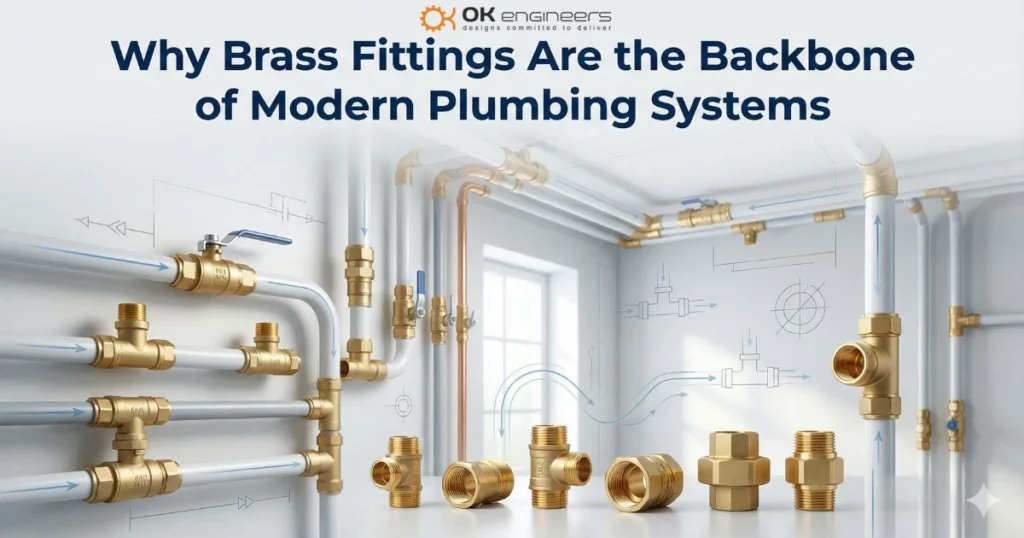
In today’s plumbing world, quality matters. Whether you are building a house, a commercial building, or updating an industrial system — the right components make all the difference. Brass fittings are often the unsung heroes of modern plumbing systems. These small but essential pieces ensure smooth flow, safety, and longevity of pipes and fixtures.
At OK Engineers, we have spent decades working with plumbers, contractors, and engineers to bring dependable solutions to every project. In this article, we explain why brass fittings are the backbone of modern plumbing systems — with clear explanations, real examples, and expert insights.
What Are Brass Fittings?
Brass Fittings are metal connectors used to join plumbing pipes and components. They are made from brass — an alloy of copper and zinc. The exact mix can vary, giving brass different strengths and qualities. They join pipes, change directions, reduce sizes, or connect to equipment like faucets and valves.
How Brass Fittings Work in Plumbing
They act as bridges between various plumbing components. They:
- Connect pipes in water supply lines
- Attach fixtures like taps and valves
- Help change direction (elbows, tees)
- Join pipes of different sizes
- Provide a tight seal to prevent leaks
Works reliably in both residential and commercial systems.
Key Benefits of Brass Fittings
Durability & Corrosion Resistance
Brass is one of the most corrosion-resistant metals used in plumbing. It withstands moisture, mineral buildup, and chemical reactions better than many metals.
Benefits:
- Lasts longer than standard metal fittings
- Doesn’t rust (unlike iron or steel)
- Holds up well even in hard water areas
Safety & Hygiene
Plumbing must deliver clean water. Brass is inherently safe and does not release harmful elements into water. This makes it ideal for potable water lines.
- These are lead-free (when certified)
- Safe for drinking water systems
- Use in both cold and hot water applications
Certified brass from reputable manufacturers ensures compliance with health standards.
Temperature & Pressure Handling
Brass excels under extreme conditions:
| Feature | Brass Fittings |
| High temperature | Excellent |
| High pressure | Very strong |
| Expands moderately | Predictable |
Brass maintains integrity better than plastics and many metals when pressure spikes or temperature changes.
Ease of Installation
Compared to heavy steel, brass is easier to cut and shape. Installers like plumbers choose this for:
- Simple soldering and threading
- Quick assembly on site
- Fewer tools needed
This reduces labor cost and time on every job.
You May Also Like This – What Is Brass Made Of ?
Brass Fittings vs Other Materials
Brass vs PVC
| Feature | Brass | PVC |
| Strength | ⭐⭐⭐⭐ | ⭐⭐ |
| Heat resistance | ⭐⭐⭐ | ⭐ |
| Cost | Visit us | Visit us |
| Longevity | ⭐⭐⭐⭐ | ⭐⭐ |
PVC is cheap but not ideal for hot water or high-pressure systems. Brass wins for durability.
Brass vs Stainless Steel
Both metals are strong, but:
- Stainless steel is expensive
- Brass is easier to machine
- Brass has better conductivity for certain uses
In plumbing, brass often offers a better value for everyday applications.
Brass vs Copper
Copper fittings are common, but brass is more robust and:
- Less prone to cracking
- More versatile for threaded systems
- Easier to connect with mixed materials
Types of Brass Fittings
Here are common types used in plumbing:
- Elbows – Change direction
- Tees – Split or join lines
- Couplings – Connect two pipes
- Adapters – Convert pipe sizes
- Bushings – Reduce pipe diameter
- Unions – Make removable connections
- Caps & Plugs – Close pipe ends
Each type plays a special role in system design.
Real-World Use Cases & Case Studies
Case Study: Residential Water System
A new housing complex in Delhi used this from a trusted supplier to minimize leaks and maintenance calls. Over two years, residents reported fewer leaks compared to similar projects using lower-grade metals. Contractors praised the reliability.
Result: Reduced callbacks by 30%.
Case Study: Industrial Cooling System
An industrial plant upgraded to brass connectors in its cooling loops. They maintained tight seals even under thermal cycling and abrasive fluids.
Outcome: Extended system life by 20% compared to carbon steel.
These results echo findings from plumbing industry reports, showing brass fittings help reduce leak-related issues and extend lifespan of systems.
How to Choose a Brass Fittings Supplier
Choosing the right brass fittings supplier matters as much as choosing the fittings themselves.
What to Look For
- Industry certifications (e.g., ISO, ANSI)
- Lead-free compliance for potable water
- Wide product range
- Technical support and guidance
- Good reviews from plumbers and engineers
Certifications & Standards
Always check for standards like:
- ASTM B62 – Common brass standard
- NSF/ANSI 61 – Safe for drinking water
- ISO 9001 – Quality management
Certified products reduce risk.
As a top brass fittings manufacturer, OK Engineers ensures all products meet global quality benchmarks.
Brass Fittings in Future Plumbing Trends
The plumbing industry is changing. New trends include:
Smart Plumbing Systems
Brass components integrate with sensors and digital monitoring. Smart valves can monitor flow and pressure to detect leaks early.
Sustainable Practices
Green building standards now favor materials that last longer and reduce waste — another reason brass excels.
Modular Plumbing
Conclusion
They are more than just connectors. They are essential components that ensure the safety, longevity, and efficiency of modern plumbing systems. From homes to industrial plants, they deliver reliability that other materials struggle to match.When you choose high-quality fittings from a trusted brass fittings supplier and brass fittings manufacturer like OK Engineers, you invest in systems that last longer, perform better, and offer peace of mind.
Prefabricated modules use these to ensure connections are secure and easy to assemble on site.These trends show this will continue to be central in modern plumbing.
FAQs
Q1: Are these safe for drinking water?
Ans. Yes. When certified lead-free, they are safe and widely used in potable water systems.
Q2: How long do they last?
Ans. With proper installation, they can last decades — often longer than other metals.
Q3: Can brass fittings be used outdoors?
Ans. Yes. Brass resists corrosion and works well outdoors, including in irrigation systems.
Q4: Are brass fittings expensive?
Ans. They cost more than plastics but offer better longevity and fewer maintenance issues — saving money over time.
Q5: How do I maintain brass fittings?
Ans. Routine checks for leaks and cleaning deposits help maintain performance. Brass rarely needs replacement if installed correctly.