


Introduction
Stainless steel is everywhere—your kitchen sink, your car parts, your medical tools, and even skyscrapers. But only a few people truly know what makes stainless steel strong, shiny, and long-lasting. In this detailed guide, OK Engineers brings you the simplest and most expert-backed breakdown of the types of stainless steel, how each type works, and where it is used.
If you are a student, buyer, manufacturer, or just curious, this guide helps you understand the science and secrets behind strength and shine.
What Is Stainless Steel?
Stainless steel is an iron-based alloy with at least 10.5% chromium, which forms a protective layer on the surface. This prevents rusting and gives stainless steel its famous shine.
Key Elements in Stainless Steel
- Chromium
- Nickel
- Molybdenum
- Carbon
- Titanium
- Manganese
These elements decide its strength, corrosion resistance, and durability.
Why Stainless Steel Matters Today (Modern Uses)
Today, stainless steel is a preferred material in:
- Construction
- Food processing
- Chemicals
- Medicine
- Architecture
- Railways
- Automotive
Industries trust it because it is:
- Strong
- Corrosion-resistant
- Easy to clean
- Long-lasting
- Aesthetically pleasing
OK Engineers uses industry-grade stainless steel in many applications, ensuring high performance and reliability.
Types of Stainless Steel (Explained Simply)
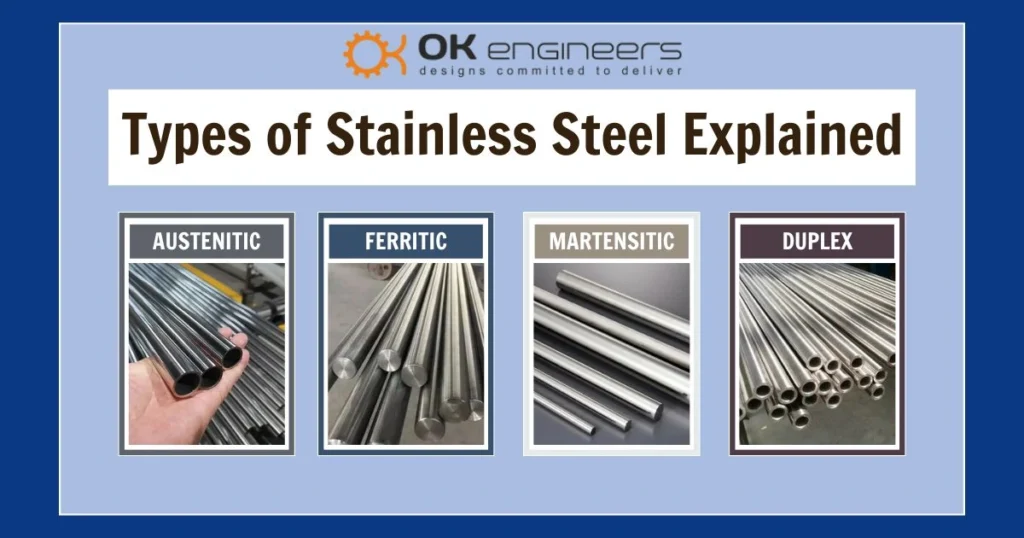
There are five major types of stainless steel, each offering unique qualities. Understanding them helps you choose the best option for your application.
1. Austenitic Stainless Steel
This is the most common and widely used category.
Key Features
- Non-magnetic
- High corrosion resistance
- Excellent formability
- Great for welding
Popular Grades
- 304 – for kitchen items
- 316 – for marine and chemical industries
Best For
- Sinks
- Cookware
- Food equipment
- Medical devices
- Marine environments
OK Engineers often recommends 304 and 316 stainless steel for long-lasting industrial components.
2. Ferritic Stainless Steel
Key Features
- Magnetic
- Low carbon content
- Good resistance to stress corrosion
- Affordable
Popular Grades
- 409 – automotive exhausts
- 430 – decorative items
Best For
- Home appliances
- Car parts
- Indoor applications
Ferritic types are ideal when cost and corrosion resistance need to balance well.
3. Martensitic Stainless Steel
Key Features
- High hardness
- Strong and durable
- Moderate corrosion resistance
- Magnetic
Popular Grades
- 410 – used in cutlery, valves and turbine parts
- 420 – used in razor blades and surgical tools
Best For
- Knives
- Surgical instruments
- Turbine blades
Companies like OK Engineers prefer martensitic steel for components requiring strength and wear resistance.
4. Duplex Stainless Steel
This is a mix of austenitic + ferritic structures.
Key Features
- Twice as strong as austenitic steel
- Excellent corrosion resistance
- Good for high-pressure applications
Popular Grades
- 2205
Best For
- Oil and gas pipelines
- Marine structures
- Chemical tankers
Duplex steel is ideal for industries needing long-term, heavy-duty performance.
5. Precipitation-Hardening (PH) Stainless Steel
Key Features
- Very high strength
- Excellent durability
- Heat-treatable
Popular Grades
- 17-4 PH
Best For
- Aerospace
- High-performance machinery
- Military equipment
PH stainless steel gives maximum strength with long service life.
You May Also Like This: Brass vs Nickel
Stainless Steel Types and Grades & What They Mean
Grades help identify the composition and performance of each stainless steel type.
| Grade | Steel Type | Features | Common Uses |
| 304 | Austenitic | Rust-resistant, easy formability | Kitchenware, tanks |
| 316 | Austenitic | Marine-grade, high corrosion resistance | Marine, pharma |
| 410 | Martensitic | Hard, strong | Blades, tools |
| 430 | Ferritic | Low nickel, affordable | Home appliances |
| 2205 | Duplex | High strength | Pipelines |
OK Engineers uses certified stainless steel grades for all industrial needs to ensure unmatched durability and quality.
How to Choose the Right Types of Stainless Steel
Here’s a simple guide:
When Austenitic Stainless Steel Is the Right Pick
- Are building kitchen or medical equipment
- Need corrosion resistance
- Want non-magnetic stainless steel
Where Ferritic Stainless Steel Works Well
- You want a cost-effective option
- You need good thermal conductivity
Applications That Suit Martensitic Stainless Steel
- You need strength and hardness
- You are making blades or tools
Industries That Benefit Most From Duplex Stainless Steel
- You need high pressure and corrosion resistance
Situations That Require PH Stainless Steel
- You need maximum strength and heat resistance
OK Engineers helps businesses select the perfect material based on strength, corrosion conditions, and performance needs.
Latest Trends & Market Insights (2024–2025 Updated)
According to 2024–2025 industry reports:
Global Stainless Steel Market Growth
- Expected to reach USD 236 billion by 2030
- CAGR projected at 6.5%
- Highest demand in construction, automotive, and renewable energy
Emerging Trends
- Eco-friendly alloy development
- Low-nickel stainless steel demand rising
- Duplex steel usage increasing in oil & gas
- Surge in food-grade stainless steel for hygiene needs
OK Engineers actively adapts to these market trends by choosing advanced steel grades and sustainable manufacturing methods.
Why Businesses Trust OK Engineers
OK Engineers is known for:
- Premium quality stainless steel components
- 100% certified material
- Experienced technical team
- Modern manufacturing processes
- Consistent quality checks
Industries choose OK Engineers because they deliver strength, shine, and long-term value across projects of all sizes.
FAQs
1. What are the different types of stainless steel?
Ans. Austenitic, Ferritic, Martensitic, Duplex, and PH stainless steel.
2. Which stainless steel is best for corrosion resistance?
Ans. Austenitic (especially 316) performs best.
3. What type is used for knives?
Ans. Martensitic stainless steel (like 420).
4. Which stainless steel grade is the cheapest?
Ans. 430 grade ferritic steel is budget-friendly.
5. Which stainless steel is used in food processing?
Ans. Grade 304 and 316.
Conclusion
Understanding the types of stainless steel helps you choose the right material for strength, shine, durability, and long-term performance. From everyday household uses to advanced engineering applications, stainless steel plays an essential role in modern life.Whether you need stainless steel for industrial components, machinery, or custom manufacturing, OK Engineers offers high-grade solutions trusted by businesses across sectors.